


This is the offical Tidal Model website. Here you will be introduced to the history of the development of the Tidal Model; overviews of Tidal theory and practice; publication lists and lots of free material. We hope that this site will help you gain a deeper understanding of 'what is' the Tidal Model and its relevance for contemporary health and social care.
What is the Tidal Model?
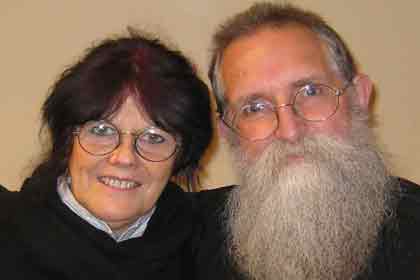
Developed by Dr Phil Barker and Poppy Buchanan-Barker, the Tidal Model is a philosophical approach to the discovery of mental health.
The Tidal Model emphasises helping people reclaim the personal story of mental distress, by recovering their voice.
By using their own language, metaphors and personal stories people begin to reclaim the meaning of their personal experiences.
This is the first step towards recovering control over their lives.
The
Tidal Model is:
1.
The first mental health recovery model developed by mental health
nurses and people who have used mental health services
2. The first recovery-focused model of mental health nursing
recognised internationally as a significant
mid-range theory
of nursing.
3. The first model of mental health nursing
to be used as the basis for interdisciplinary mental health care.
4. The first model to focus beginning the recovery journey when
the person is at their lowest ebb - experiencing the
most
serious problems in living.
Click here to continue reading - "What is the Tidal Model?
Problems in Living
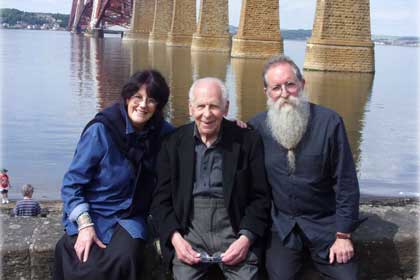
Poppy and Phil recognise that there are rarely any simple answers to the problems we experience in our lives. The answer is to work out to how live more effectively with them.
Their old friend Thomas Szasz, famously said:
"Life is not a problems to be solved. Life is something to be lived, as intelligently, as competently, as well as we can - day in and day out. Life is something we must endure. There is no solution for it.
First, know your purpose!
Trying to help someone with a problem in living is rarely easy. Despite all that we might have in common, everyone is unique - and each person's reaction to any problem in living also is unique. If we are to offer meaningful help the first thing we must do is find out what - exactly - they would find helpful. What 'works' for one person will not always 'work' for another.
Our 'respectful purpose' is to find out 'what needs to be done'. We can accomplish this by asking the person: "what could I do for you, or with you, that might be helpful - right now?
Click Here To Continue ReadingWhy Tidal?
The commonest question we are asked is "why Tidal?" Our reasons are simple - and relate to our understanding of and relationship with water itself.
1. Water is the perfect metaphor for change. As it flows it
never repeats itself.
2. All cultures use water in purification
rituals�?from baptism to the daily shower.
3. Everyone enters
the world through a water-borne birth
4. Many people choose to
leave this world through a watery grave
5. People are at least
60% water and some organs are over 80%
6. The Scots and the
Irish (our people) are island people �?and have a powerful
relationship with the sea and seafaring.
7. Water is a powerful
natural force - a single drip can erode stone, given time.
8.
Most changes in our behaviour and personalities occurs slowly,
over time- rather like the drip effect itself.
9. The process
of change is like the rhythm of the waves - moving forwards and
backwards - only showing any change over a period of time.
10.Water- like life itself - is a force we must learn to live with
but can never fully conquer.We must learn to swim or build a boat.
The Tidal Metaphor
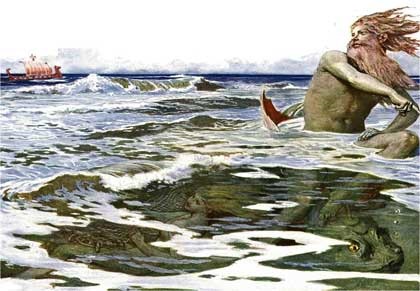
People often find it difficult to describe their experiences - especially when they involve powerful events or strong emotions - like death, grief or loss, joy, surprise or wonder. Usually, we need to borrow words, phrases or complete stories to help explain the meaning or significance of the experience. Without simile and metaphor we could not discuss our deepest experiences.
Life is a voyage undertaken on an ocean of experience. All
human development, including the experience of illness and health,
involves discoveries made on that voyage.
At critical points in the voyage the
person may experience storms or even piracy -in everyday terms
this might be called a crisis.
At other
times the ship may begin to take in water and the person may face
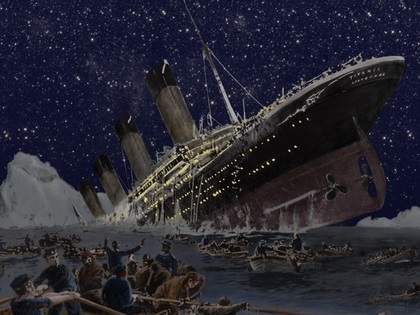
the prospect of drowning or shipwreck - commonly called a
breakdown.
The person may
seek- or be guided to - a safe haven, to undertake repairs, or
otherwise address the effects of the trauma - we might call this
rehabilitation.
Only once the ship is
made intact, and the person has regained the necessary sea-legs,
can the ship set sail again, aiming to put the person back on the
life course .
This is the next stage in the voyage of recovery.
Click Here To Continue Reading